

The EU Plans a €50 Billion Fund to Buy Stakes in European Tech
The European Commission has proposed a Sovereign Tech Equity Fund that would buy shares in European AI, chips and quantum firms. Officials have set a target of €50 billion, but the sum is not in the legal text and depends on the next EU budget.
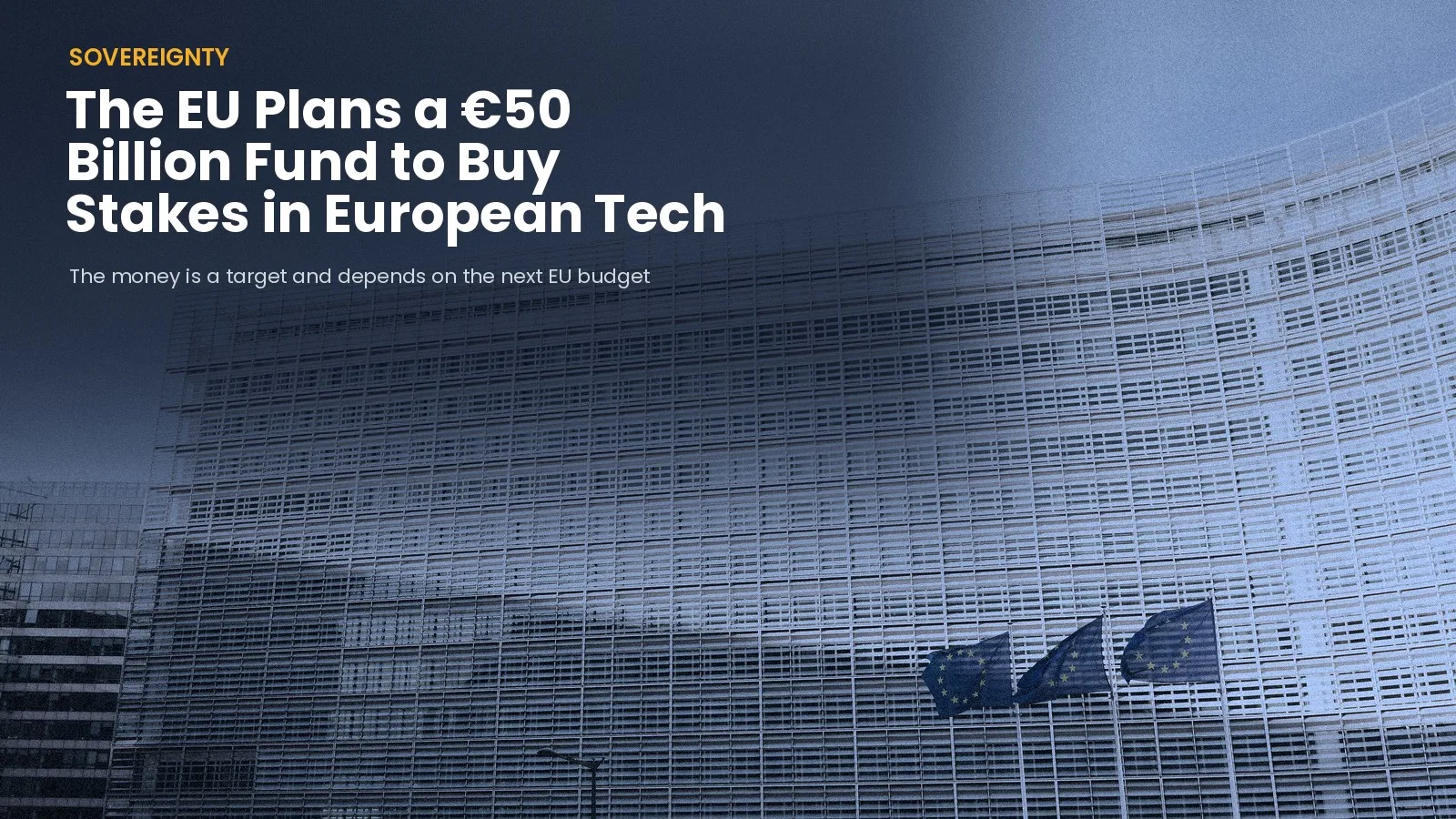
The European Commission now wants to do more than write rules for artificial intelligence. On 25 November it proposed a fund that would buy shares in European tech companies, so they can grow without leaving the continent. The plan sits inside a new Quantum Act. Officials have set a target of €50 billion for the fund, but that sum is not in the legal text and has not been budgeted.
A stake, not just a grant
The proposed Sovereign Tech Equity Fund, or STEF, would let the EU take direct equity, or similar holdings, in firms and projects that matter for "technological sovereignty and economic security." That phrase comes from the Commission's proposal. The fund would cover quantum technology and the wider stack of chips, cloud and AI, as well as other fields the Commission lists, such as cybersecurity and biotech.
The Union could sit as a shareholder alongside member states and other public or private investors. The Commission says it will work with the European Investment Bank Group, member states and other partners to set the fund up. The legal text says the fund is meant mainly for companies larger than scale-ups, and for large investments in tech infrastructure. It would sit above existing EU tools. The European Innovation Council invests up to €30 million in a single firm. The Scaleup Europe Fund, set up in 2026, backs larger growth rounds. A Commission official said what is missing is "larger tickets" for strategic companies. Henna Virkkunen, the Commission's tech sovereignty chief, said such technologies often need investments of hundreds of millions of euros, and that "no company should be obliged to leave Europe due to a lack of finance."
A target, not a budget line
The Quantum Act creates a legal basis to set the fund up. It does not allocate any money. Virkkunen called €50 billion a "sufficient starting point," and said the wider need is €400 billion to €500 billion. Press reports, citing an EU official, say the aim is up to €6 of private money for every €1 of public money. None of those figures is written into the proposal.
The fund is meant to start with the EU's next long-term budget, which runs from 2028 to 2034 and is still being negotiated. The Commission says it wants the fund running by the start of that budget period. The European Parliament and EU governments must still agree the law.
The European Quantum Industry Consortium, which represents more than 240 organisations, welcomed the proposal but asked for a dedicated share of the fund for quantum start-ups and scale-ups.
From rules to ownership
Europe has spent recent years writing rules for AI, data and digital markets. This proposal would put public money on the share register as well. A target is not the same as cash in the bank. Whether member states, the EU budget and private investors actually fill the fund will decide if that shift is real.
Sources
- Commission proposes Quantum Act and new Sovereign Tech Equity Fund to strengthen Europe's industrial capacity and security (European Commission press release IP/26/2567, 25 November 2026)
- The Quantum Act explained (European Commission, 25 November 2026)
- Proposal for a Quantum Act (COM(2026) 965, 25 November 2026)
- EU Commission wants €50B fund to keep tech European (Pieter Haeck, POLITICO, 25 November 2026)
- EU unveils €50 billion tech fund to challenge US and China (Jonathan Benton, Euronews, 25 November 2026)
- Virkkunen eyes €50 billion to kick start 'sovereign tech equity fund' (Maximilian Henning, Rapporteur, 25 November 2026)
- QuIC Welcomes the European Quantum Act, Pledges to 'Mobilize Industry' (The Quantum Insider, 25 November 2026)
Photo: "Berlaymont building 2022" by Euro Pictures, via Wikimedia Commons, CC BY 2.0. The Berlaymont building, European Commission headquarters in Brussels, 15 October 2022. Originally published on Flickr. Graded and overlaid by PSI.