

What the Philippines Stands to Gain From Pax Silica
The Philippines has secured the first AI-native industrial hub under Washington's Pax Silica initiative, a position that could lift the country from the assembly lines of the old electronics economy into the upper tiers of the global AI supply chain.
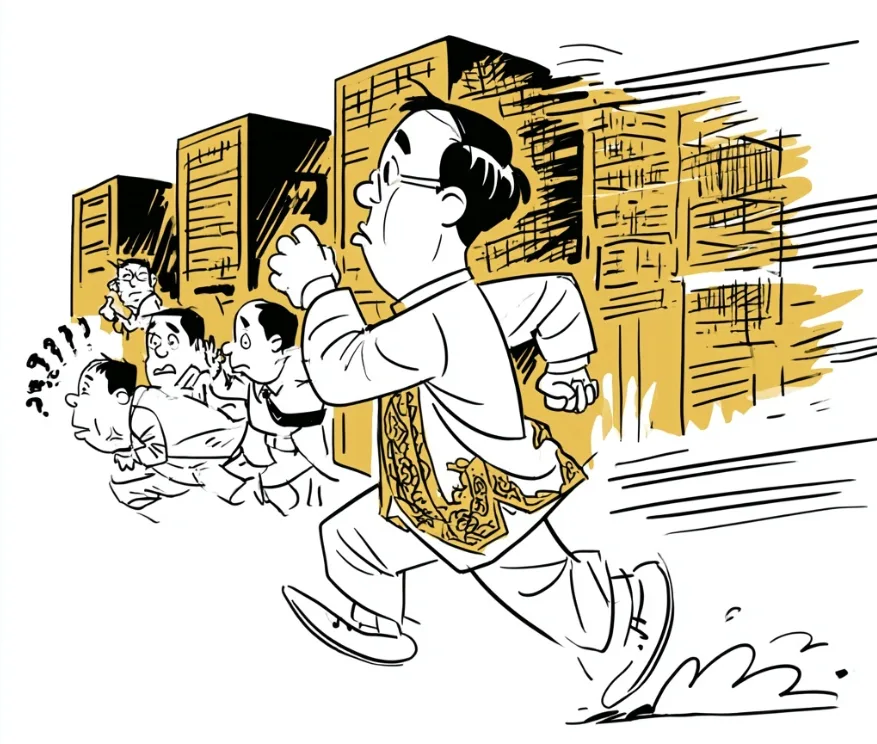
The Philippines has secured the first AI-native industrial hub under Washington's Pax Silica initiative, a position that could lift the country from the assembly lines of the old electronics economy into the upper tiers of the global AI supply chain, carrying projections of up to 800,000 jobs and as much as $70 billion in investment.
A $70-Billion Opening at New Clark City
Pax Silica is the US State Department's economic-security framework for securing the silicon supply chain, launched in December 2025 and now counting some two dozen signatories. The Philippines signed on 17 April 2026, and within days Washington and Manila announced its flagship project: a roughly 4,000-acre (1,618-hectare) economic security zone at New Clark City, Tarlac, billed as the first AI-native industrial acceleration hub under the initiative. The zone is planned to host hyperscale data centers, semiconductor processing, critical-mineral refining, and research and development.
The numbers attached to it are substantial. The Bases Conversion and Development Authority (BCDA) cites an initial investment target of $10 billion, rising to between $40 billion and $70 billion at full buildout, with 130,000 to 190,000 direct jobs and a framework projection of up to 800,000 jobs overall. Foxconn is positioned as anchor tenant, the US International Development Finance Corporation as primary funder. The Department of Finance aims to sign the framework deal within the year, while Malacañang notes the final terms are still being negotiated.
From Assembly Lines to the AI Value Chain
For a country whose role in electronics has long been confined to low-margin assembly and export, the hub represents a rare structural upgrade: mineral processing, chip manufacturing, and AI compute located on Philippine soil rather than merely passing through it. BCDA leadership frames it as a brain gain opportunity, a chance to keep Filipino engineering talent onshore and working at the frontier. Hosting hyperscale compute domestically also strengthens the country's data-residency posture, since Filipino data and workloads can increasingly be processed at home rather than in foreign jurisdictions.
There is a first-mover dividend as well. Among two dozen Pax Silica signatories, the Philippines is the one Washington chose for the inaugural hub, giving Manila leverage to set the template. The Management Association of the Philippines has urged the government to treat the deal as a strategic negotiation: lock in technology transfer, workforce development, research partnerships, and Filipino participation in leadership and technical roles, so the investment builds domestic capability rather than another enclave of foreign-run infrastructure. Membership in a trusted-partner supply network also reduces the country's exposure to coercive chokepoints elsewhere in the technology chain.
The BPO Clock Is Ticking
The urgency is sharpened by what AI is already doing to the country's current economic engine. Business process outsourcing employs about 1.9 million Filipinos and generated roughly $40 billion in 2025, around 8 percent of gross domestic product, and it sits squarely in the path of the very technology the new hub will build. IMF research maps about a third of Philippine jobs as highly exposed to AI; customer service roles face automation risk estimated as high as 80 percent, and tens of thousands of BPO workers are assessed to be at immediate risk of displacement. Early retraining efforts exist but their scale remains modest against a workforce of nearly two million. The Philippines must transition its existing workers quickly to survive the shift, and the hub is the potential landing zone.
Control Is Written in the Fine Print
But the devil is in the details. The government needs to review implications of lease duration, transferability, dispute jurisdiction, and technology-transfer obligations, determine who actually controls the infrastructure a nation's AI future runs on and not headline investment figures. For Philippine decision-makers, the leverage window is now, before signing; commitments on Filipino participation in leadership, local capability-building, and enforceable oversight are far harder to extract afterward. For organisations planning to build on the zone's compute, the unresolved questions of governing law, land control, and long-horizon tenancy are supply-chain risks to price in, not footnotes.
Move the People as Fast as the Machines
Pax Silica offers the Philippines its clearest path in a generation to climb the technology value chain, arriving just as AI begins eroding the BPO jobs the economy leans on; the country captures the prize only if it moves its workers up the chain as fast as the technology moves in.
Sources
- U.S. Department of State: US and Philippines launch plans for 4,000-acre economic security zone, first AI-native industrial acceleration hub under Pax Silica (April 2026)
- Philippine News Agency: Pax Silica hub to boost PH role in global AI value chain
- Philstar: Pax Silica investors may lease New Clark land for 99 years, BCDA (24 July 2026)
- BusinessWorld: Philippines business group backs Pax Silica, calls for sovereignty protections (30 July 2026)
- Daily Tribune: Pax Silica eyes 800,000 jobs, but Palace says deal isn't final (31 July 2026)
- Wikipedia: Pax Silica (signatory timeline)
- The Manila Times: The AI Reckoning, what artificial intelligence means for Philippine jobs, BPO, and real estate (30 June 2026)
- The Business Manual: 2026 BPO outlook, is AI replacing or assisting Filipinos? (1 May 2026)
Source: U.S. Department of State